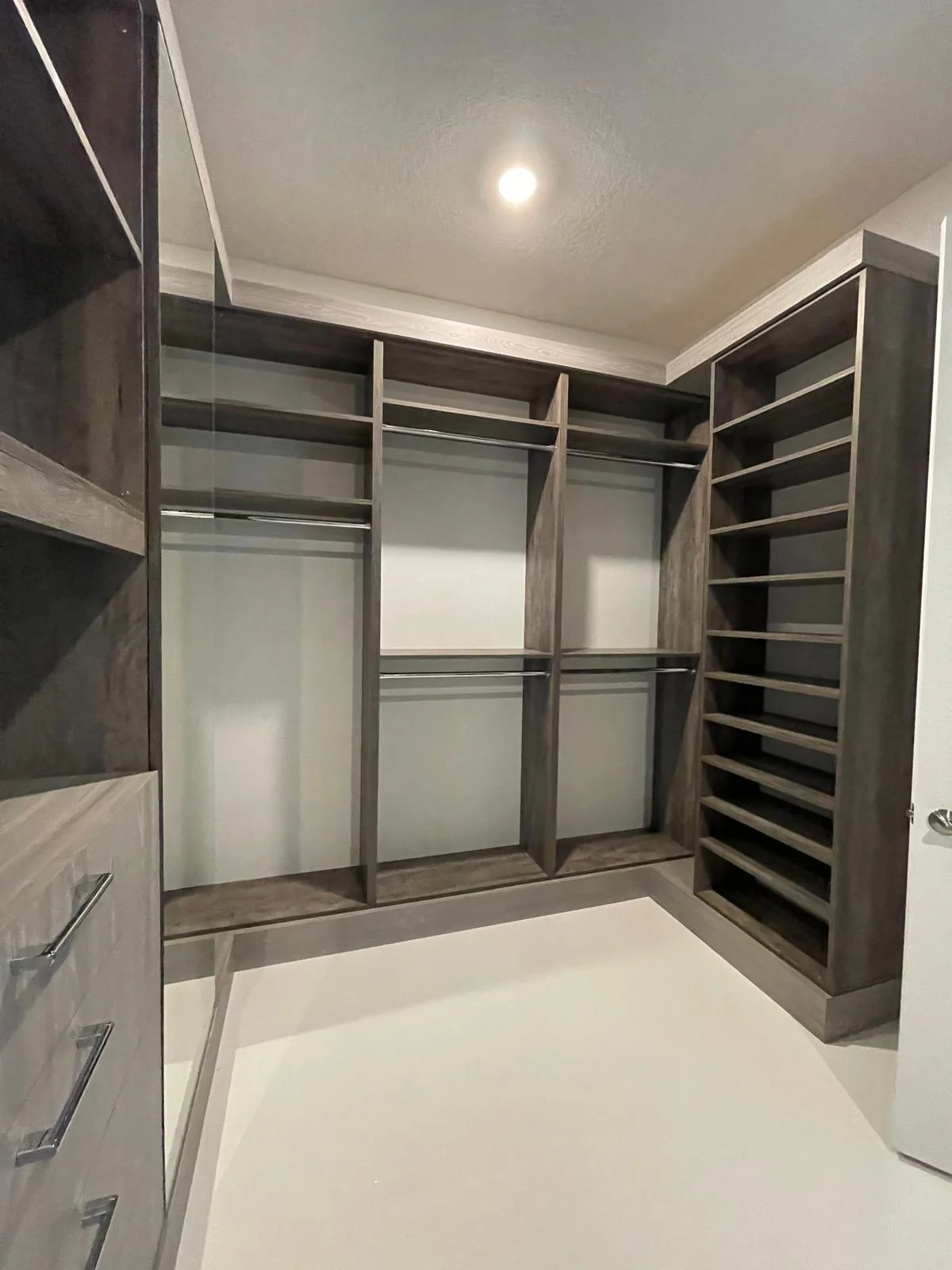
The best walk-in closet design makes it easier to move, choose, and put things away. Start by protecting a comfortable path through the room, then build storage around your wardrobe and your daily rhythm. Style matters, but it works best when it grows out of order rather than competing with it.
How should a walk-in closet layout flow?
Stand at the doorway and consider what should happen first. You may want immediate access to everyday clothing, a clear view of shoes, or a natural place to set down a folded item. The arrangement should guide you through the room without forcing a detour around a feature that looks good but is awkward in use.
One-wall layouts can feel clean and direct. Two adjacent walls can create a natural dressing corner. Opposing storage walls can work well when the path between them remains easy to use. The right answer depends on the room’s proportions, openings, and the space needed to move comfortably while doors and drawers are in use.
A central element should earn its place. A folding surface or island can provide useful landing space and contained storage in a larger walk-in. In a more compact room, preserving open circulation may be the more considered choice. There is no need to force the same feature into every walk-in.
How do you give every category a clear home?
A walk-in becomes more peaceful when its storage follows a simple logic. Group clothing by the way you use it: daily wear, occasion pieces, long garments, folded items, shoes, bags, and accessories. Within those groups, place the most frequently used pieces where they are simplest to reach.
For a shared closet, begin with an honest conversation about habits rather than dividing the room perfectly down the middle. One person may need more hanging space, while the other needs more folded storage or a clearer shoe zone. A balanced plan respects those differences.
Keep a small amount of open capacity. It gives laundry a temporary place to land and prevents the closet from feeling overfilled as clothing changes over time.
Can walk-in storage support a seasonal wardrobe without taking over the room?
Yes, when seasonal or occasional items are treated as a defined category rather than overflow. Place them in a dedicated zone that does not crowd daily clothing. The goal is not to hide everything away; it is to keep the pieces you need often in easy view and the rest orderly.
Before storing less-frequently used clothes, make sure they are clean and give garments room for air circulation. The University of Florida’s home-care guidance specifically recommends leaving space between garments and avoiding tightly wrapping stored items in plastic. See the University of Florida guidance on closet storage.
How can a walk-in feel refined without feeling precious?
Quiet luxury is usually about visual restraint and consistent decisions. Repeating a simple rhythm of hanging, folded storage, and contained accessories can look more composed than adding a different treatment for every category. Consider how much you prefer to see versus put away, then use that preference consistently.
A softly organized closet should still be easy to maintain. Choose categories you can reset in a few minutes. Make your daily pieces obvious. Keep the most visually busy items together rather than scattered across the room. A polished result is one that still works on a rushed weekday.
What should Boca Raton condo owners check before planning?
If your walk-in closet is in a condominium, ask the association about its current procedures for contractor access, deliveries, elevator use, and protection of common areas before making logistics assumptions. The association’s governing documents matter: Florida law provides that condominium operations are governed through the association’s articles and bylaws, with the bylaws included with or incorporated into the declaration. Read the relevant Florida statute. Your association can clarify the rules that apply to your building.
What is the easiest way to begin planning?
Take photos from the doorway and each wall, then make a short list of what you would like the room to do better. Mention who uses the space, the categories that feel cramped, and any feature you are considering. That is enough to make a first conversation productive.
Coco Bianco Group begins with a complimentary 15-minute phone consultation. Submit the form to request the call, and the team will contact you to arrange it; the form does not automatically book a time. You can also explore the broader custom closets offering or compare compact-space ideas in our Boynton Beach reach-in closet guide. Request My Phone Consultation.
Common Questions
Does every walk-in closet need an island?
No. A central piece makes sense only when it adds useful storage or a folding surface without interrupting comfortable movement through the room.
How should two people share a walk-in closet?
Plan by storage need and routine, not only by equal floor area. Each person can have clearly defined zones that reflect how they actually dress and store clothing.
What should stay closest to the entrance?
Put the items you use most often where they are easiest to reach. The exact category varies, but daily clothing is a common priority.
Can a walk-in closet include storage for less-frequently used items?
Yes. A defined zone for occasional or seasonal items can keep everyday storage clear, provided the room still works well for daily use.
Is the first consultation in person?
The first step is a complimentary 15-minute phone consultation. After you submit the form, the team contacts you to arrange the call; any later measurement or in-home visit is considered only if appropriate.
Your Next Step
Let’s talk about your closet.
Request a complimentary 15-minute phone consultation. Our team will contact you to arrange the call. This is not an automatic booking or an initial in-home visit.
Request My Phone Consultation