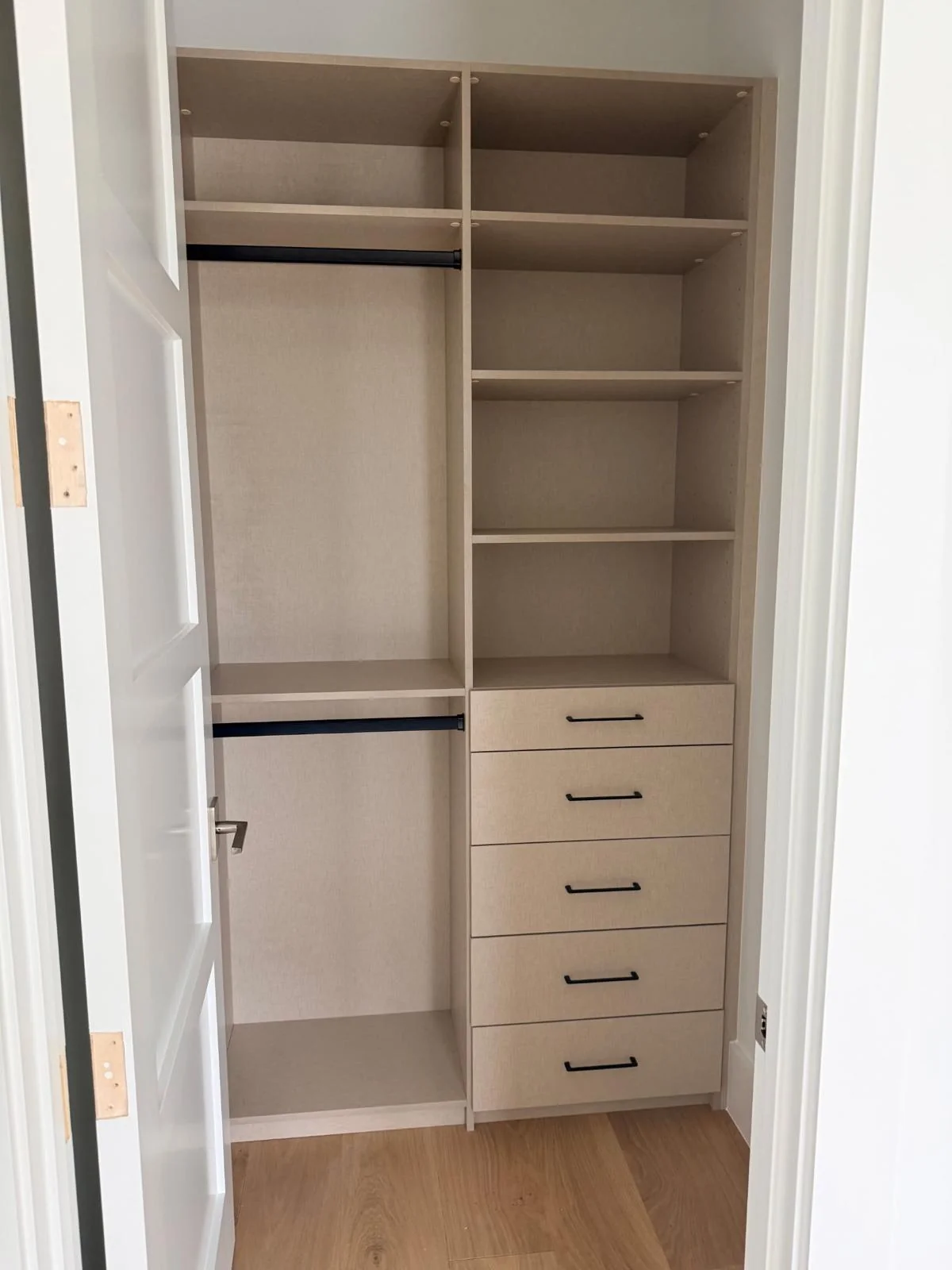
An existing reach-in closet can feel remarkably capable when every part of its opening has a job. The most effective improvements do not ask a compact space to imitate a walk-in. They make selection, storage, and reset easier within the closet you already have.
What makes a reach-in closet feel larger in daily use?
Clarity makes the difference. When long garments, short-hang clothing, folded pieces, shoes, and accessories compete for the same stretch of space, the closet feels smaller than it is. Dividing the interior into clear categories helps you see what belongs where and prevents the usual pile-up on the floor or a high shelf.
Start at the front edge. The items you reach for most should not require moving three other categories first. Less-frequently used items can live higher, lower, or farther to one side, while daily clothing stays central and visible. That hierarchy makes an ordinary reach-in feel more deliberate.
If your closet serves as overflow for a primary wardrobe, decide whether it is a second daily closet, a specialty closet, or long-term storage. A space with one role is simpler to plan than one trying to hold every category in the house.
How should you plan around an existing reach-in opening?
Work from what is fixed. Note the full opening, the door type and swing, the interior depth, and any walls, vents, outlets, or access panels that need to remain clear. Then consider what you can reach comfortably from the doorway. This keeps the plan grounded in how the closet will be used rather than in a generic layout.
A practical arrangement often combines a dedicated hanging zone with a distinct folded-storage zone and a lower area for shoes or other contained categories. The exact mix should follow your wardrobe. Someone with mostly dresses, shirts, and jackets will have different needs from someone who stores more folded clothing or athletic gear.
For a broader look at how layout choices begin, read our custom closet design planning guide for Delray Beach. If your needs have grown beyond the existing opening, our Boca Raton walk-in closet design guide can help you think through a larger dressing space.
Which reach-in zones reduce morning friction?
Give the most common decisions their own places. A daily hanging section can handle ready-to-wear clothing. Folded stacks work best when the categories are specific enough to stay intact. Shoes are easier to manage when pairs have a consistent home rather than collecting under hanging garments.
Small items deserve a rule as well. Keep accessories together, whether you prefer them visible for quick choice or contained for a quieter appearance. The point is to avoid a collection of “temporary” surfaces that soon become permanent clutter.
Do not overfill the upper portion just because it is available. Reserve it for items you do not need every day, then keep a clear routine for returning them. A reach-in works best when the area closest to you remains usable.
How do you keep a compact closet calm, not crowded?
Choose a limited number of storage behaviors and repeat them. Hang like items together. Fold only the categories you will realistically refold. Group shoes with shoes, bags with bags, and accessories with accessories. The result looks calm because it is easy to understand, not because it depends on constant styling.
A few visual decisions can help, too. Keep the most active categories in one easy-to-scan area. Contain the smaller, busier items. Leave a little spare room so laundry has somewhere to go while you reset the closet. This kind of order is modest, but it changes how the space feels each time you open the door.
What should you do with clothing that is stored less often?
Treat it carefully and keep it separate from your daily rotation. The University of Florida recommends putting only clean clothes in closets, allowing space between garments for air circulation, and not tightly wrapping stored items in plastic. Read the University of Florida’s closet-care recommendations. Those habits are sensible for clothing you may not reach for every week.
If you choose to rotate a seasonal or occasion-based wardrobe, give that group one predictable place. The purpose is not to assume one lifestyle for every Boynton Beach homeowner; it is to make an optional routine easier for the households that use it.
What should you bring to a first conversation about a reach-in closet?
Photos of the opening and a brief list of the hardest-to-store categories are a useful start. Include any fixed features inside or near the closet and explain whether the closet is for one person, shared use, or household overflow. You do not need to have every decision made in advance.
Coco Bianco Group starts with a complimentary 15-minute phone consultation. Submit the form to request it, and the team will contact you to arrange the call rather than booking it automatically. Measurements or an in-home visit come later only when appropriate. To see the wider range of planned storage spaces, visit custom closets. Request My Phone Consultation.
Common Questions
Can an existing reach-in closet be more organized without changing the room?
Yes. Planning the interior around its existing opening, depth, and fixed features can create clearer zones for the clothing and items you already store there.
What belongs in the easiest-to-reach part of a reach-in closet?
Daily clothing and the categories you use most often usually belong closest to the doorway. Less-frequently used items can be placed in more secondary areas.
How can I prevent shoes from becoming clutter in a small closet?
Assign shoes one consistent, contained zone instead of letting them collect beneath hanging clothing. The right approach depends on how many pairs you use regularly.
Should I use a reach-in closet for seasonal storage?
You can, if it matches your routine. Keep less-frequently used pieces in a dedicated area so they do not interfere with everyday access.
How do I request a consultation?
Use the form to request a complimentary 15-minute phone consultation. The team will contact you to arrange a time, and any later measurement or in-home visit is considered only if appropriate.
Your Next Step
Let’s talk about your closet.
Request a complimentary 15-minute phone consultation. Our team will contact you to arrange the call. This is not an automatic booking or an initial in-home visit.
Request My Phone Consultation