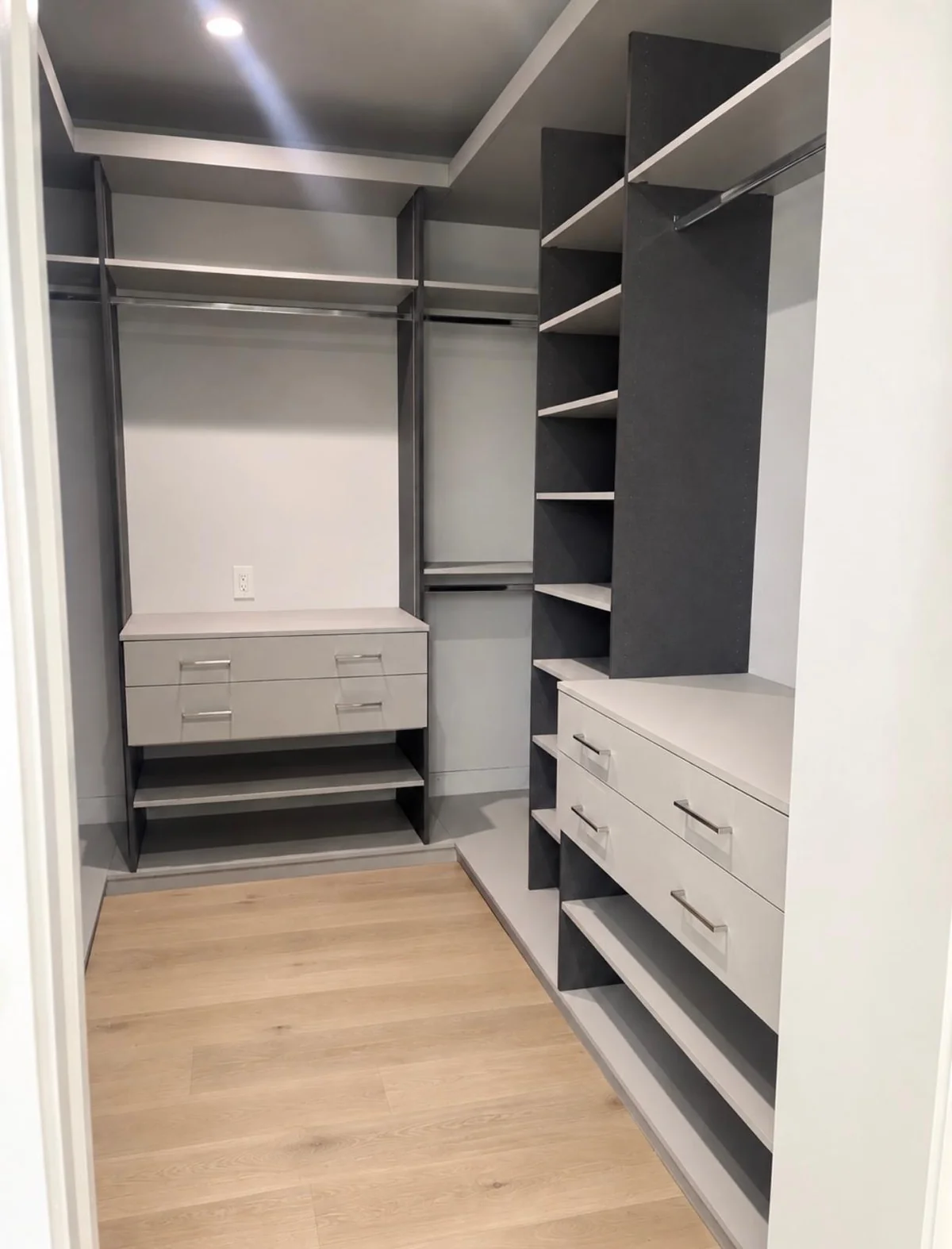
A custom closet is easiest to plan when it begins with your routine, not a display image. Take stock of what you actually use, identify the moments that feel crowded or slow, and let those observations guide the layout. The goal is a room or reach-in that feels composed on an ordinary morning—not just after it has been styled.
What should you decide before choosing a closet layout?
Start with three questions: What lives here now? What gets used most often? What would make getting dressed less effortful? A closet that serves a work wardrobe will be organized differently from one that holds weekend clothing, formal pieces, linens, or a little of everything.
Make a simple wardrobe audit before considering components. Separate your belongings into long-hang items, short-hang items, folded clothing, shoes, bags, accessories, and items you reach for only occasionally. You do not need a perfect count. You need enough clarity to see which category is taking up more room than it should.
Then note the actions that happen in the closet. Do you choose clothes for the next day? Fold laundry there? Share the space? Prefer to see shoes at a glance? These habits help establish zones instead of asking one shelf or hanging area to do every job.
Which custom closet layout fits the room you already have?
The most useful layout follows the footprint and the way you enter the space. A reach-in can become highly ordered when its full width is planned as a single system. A walk-in may use one wall, two adjacent walls, or opposing walls depending on the room’s shape and the clear path needed to move through it.
Keep the center open enough to use the closet comfortably. If a feature in the middle would interrupt movement, it is not adding value simply because it looks dramatic. In a larger walk-in, a freestanding folding surface or central storage can be helpful when it supports the way you dress and still leaves the room easy to navigate.
If you are weighing a compact space, our guide to reach-in closet ideas for Boynton Beach homes focuses on making an existing opening work harder. For a dedicated dressing space, see walk-in closet design in Boca Raton.
How should hanging space and shelves work together?
Use hanging space for the pieces that wrinkle, need visual selection, or are worn frequently. Use shelves for folded categories that stay neater when stacked in clear groups. The important choice is not “more hanging” or “more shelving”; it is making each type of storage answer to a specific category.
A useful plan might place daily clothing where it is quickest to reach, reserve a separate area for longer garments, and give folded pieces a defined home rather than letting them migrate onto an open surface. Small accessories benefit from a place that keeps them visible enough to use, but contained enough to keep the overall view calm.
Avoid planning only for today’s volume. Leave some room for laundry returning to the closet, an evolving wardrobe, or guest use. Flexibility can be as simple as a zone that is not assigned too narrowly from the start.
What local details are worth considering in Delray Beach?
Coastal South Florida living can make basic storage habits especially worthwhile. The University of Florida advises leaving clean clothes in closets, allowing space between garments for air circulation, and avoiding tightly wrapping stored items in plastic. Read the University of Florida’s clothing-storage guidance for the full context. Planning for a little breathing room between categories is a practical habit, not an aesthetic afterthought.
If your home is a condominium, check with your association before work is scheduled about its own delivery, elevator, access, and protection procedures. Florida condominium operations are governed through association documents such as the declaration and bylaws, so the relevant process can vary by building. Review the Florida Condominium Act if you need to understand that framework.
What should you prepare for a closet-planning conversation?
Bring a practical snapshot, not a polished presentation:
- A few photos of the closet from the doorway and each side.
- A rough note of the opening, walls, doors, windows, outlets, vents, or anything else that affects usable space.
- The categories that frustrate you most, such as shoes without a home or folded clothing that collapses into piles.
- Any shared-use needs, including separate routines or storage preferences.
- A note about building procedures if you live in a managed condo community.
This information makes an early conversation more useful while keeping the focus on your priorities. Details such as field measurements or an in-home visit can be considered later if they are appropriate for the project.
How do you start with Coco Bianco Group?
The first step is deliberately simple: submit the consultation form to request a complimentary 15-minute phone consultation. It is not an automatic appointment. The Coco Bianco Group team will contact you to arrange a time for the call, listen to what is not working, and help identify a sensible next step.
For an overview of the spaces we plan, visit custom closets. When you are ready to talk through your own space, Request My Phone Consultation.
Common Questions
What should I measure before discussing a custom closet?
A rough note of the closet’s width, depth, height, door swing, and any openings or fixed features is helpful. Exact measurements can be addressed later if they are needed.
Do I need to empty my closet before the first call?
No. A clear description of what feels difficult and a few photos are enough for an initial conversation. A wardrobe audit can be done gradually.
Can a custom closet help a shared closet feel less crowded?
Yes. Planning separate zones around each person’s clothing categories and routines can make a shared space easier to use without treating every item the same way.
Should I plan for seasonal clothing?
If you rotate clothing during the year, identify which pieces are less frequently used and give them a distinct, accessible zone. The right amount of dedicated storage depends on your own wardrobe.
How does the consultation work?
Submit the form to request a complimentary 15-minute phone consultation. A team member will contact you to arrange the call; it is not automatically booked online.
Your Next Step
Let’s talk about your closet.
Request a complimentary 15-minute phone consultation. Our team will contact you to arrange the call. This is not an automatic booking or an initial in-home visit.
Request My Phone Consultation