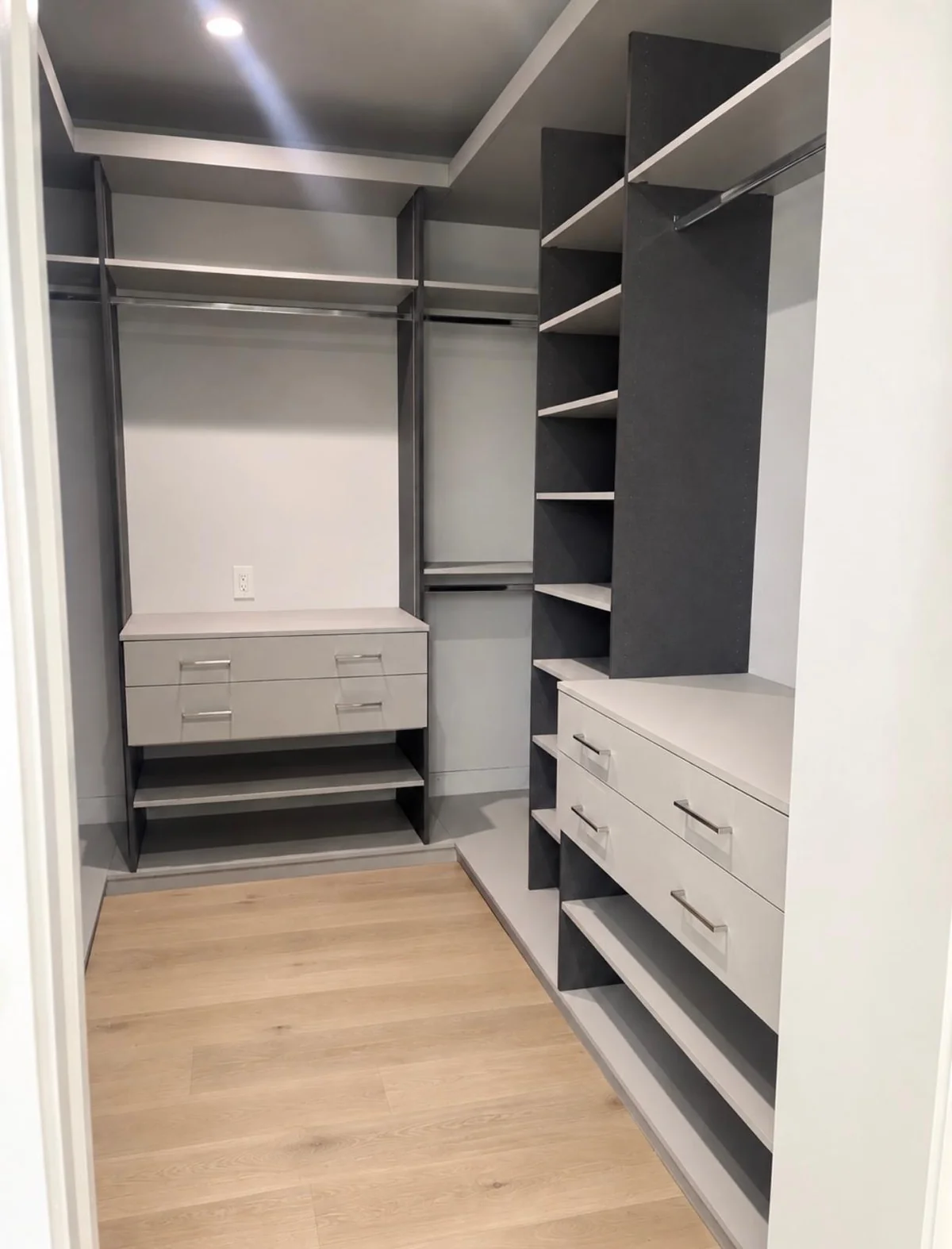
The right balance of hanging space and drawers depends on what you wear, how each garment should be stored, and the space you can comfortably use. There is no single ratio that suits every custom closet. Start by separating hanging garments from folded items, then choose drawers or shelves according to how you find and put away those pieces. For a Boca Raton home, a useful plan should work for your everyday wardrobe as well as clothing kept for occasional use.
What should you count before choosing hanging space or drawers?
Sort the clothing you intend to keep into three groups: pieces you normally hang, pieces you fold, and pieces whose storage method needs checking against their maker's guidance. Keep shoes, bags and accessories as separate categories so they are not overlooked in the layout.
Within the hanging group, separate shorter pieces from longer garments. A collection of shirts and folded-over trousers uses space differently from long dresses. Within folded clothing, distinguish small everyday items from bulkier pieces. A deep stack of sweaters should not be treated as equivalent to a few folded tees.
Do this before deciding how many drawers you want. A drawer count is a design choice, not a substitute for knowing what those drawers need to hold.
Which garments are better candidates for hanging?
Consider hanging for pieces you already store successfully that way, such as structured jackets, woven shirts or dresses, while checking the garment maker's instructions. Length, weight and construction all matter. A heavy knit dress should not automatically be treated like a lightweight woven dress simply because both belong to the same category.
Use the hangers you intend to keep when discussing the layout. Check representative garments at their full hanging length, and allow room to remove them without catching them on a shelf or drawer below.
Two levels of hanging can be worth discussing for shorter pieces when the space and your comfortable reach allow it. That does not mean every section should have two rods, or that adding a second rod doubles the capacity of the entire closet. Keep longer garments in the conversation rather than discovering later that there is nowhere for them to hang freely.
Which clothing is better folded?
Folded storage is often a practical choice for tees, gym clothing and other items you already fold. Knitwear needs particular attention to garment care rather than a purely visual decision.
In its guide to storing wool clothes, Woolmark recommends folding rather than hanging wool garments during storage to help them retain their shape. That is useful when planning space for wool knitwear kept between seasons; it is not a blanket rule for every fabric or tailored garment. Follow the instructions for the pieces you own.
Ask whether a folded item is easy to identify, remove and return. If reaching for the bottom item means rebuilding a tall stack every morning, a different arrangement may be more practical than simply adding another shelf.
When are drawers more useful than open shelves?
Drawers can give smaller folded categories a defined place and keep them out of view. They may suit someone who prefers to separate underwear, tees or exercise clothing rather than seeing every item on open shelving.
Before choosing them, consider the usable interior, not only the appearance of the drawer front. Try folding a few representative pieces in your usual way. Would they fit without being forced into place? Would you prefer short stacks, separate groups or an upright arrangement that lets you see several items at once? These are preferences to discuss, not requirements to adopt.
An open shelf may suit folded pieces you want to see immediately, provided the stack remains manageable. A mix of drawers and shelves can work better than choosing one storage type for everything. Specific dimensions, dividers and hardware should be confirmed during design planning rather than assumed from an inspiration photo.
How do closet doors and circulation affect the decision?
A drawer must open into usable space. In a reach-in closet, a sliding door or narrow opening can affect whether you can reach the full drawer. In a walk-in, check whether opening it interrupts the route through the room or conflicts with storage on the opposite wall.
Hanging areas need accessible space too. A full rail may hold the clothes, yet still make it awkward to retrieve one hanger. Avoid treating every available inch as space that must be filled.
For a smaller closet opening, see our reach-in closet guide for Boynton Beach homes. For the room-level decisions behind a larger layout, read our Boca Raton walk-in closet design guide.
What if two people need different kinds of storage?
Divide the closet around each person's clothing and habits rather than giving both people identical sections. One may need more long hanging; the other may need folded storage and a small amount of short hanging.
Start with the categories each person uses daily, then identify occasional items that can occupy a separate zone. Equal-looking drawer stacks are not especially helpful if one person has unused drawers while the other has clothing without a suitable place.
Think through the return trip from laundry as well. If putting things away requires a folding method neither person likes, the arrangement may be difficult to maintain even when it looks tidy at first.
Does seasonal clothing change the plan for a Boca Raton home?
If you keep travel clothing or a wardrobe for cooler weather, make it a defined category. It should not take over the space intended for everyday clothing simply because it is used less often.
The University of Florida's seasonal-home guidance recommends leaving space between stored garments for air circulation. In closet planning, that supports a simple precaution: do not pack every rail so tightly that garments are compressed together. It does not mean new shelving or drawers solve a home's moisture problem.
Describe any extended absences or concerns about the storage environment during planning, and seek appropriate home-maintenance advice where needed. Keep garment-care decisions separate from assumptions about a cabinet's appearance.
How can you prepare for the first design conversation?
Take a few photos of the closet, note the clothing categories you struggle to store, and identify whether your biggest frustration is crowded hanging, folded piles or difficult access. Rough observations are enough to begin; you do not need a finished layout or final measurements.
Explore Coco Bianco custom closet design options or use our first phone-consultation preparation guide for a short checklist. The photos show design options, not a guarantee that a particular component will suit or be available for your project.
Start with a complimentary 15-minute phone consultation. Submit the request form and our team will contact you to arrange the call. Submitting the form does not automatically reserve an appointment. Measurements and any in-home visit come later, if appropriate.
Request My Phone Consultation.
Common Questions
What percentage of a closet should be hanging space?
There is no universal percentage. Start with your actual hanging garments, folded clothing and other storage categories, then check the space needed for access. The right balance depends on the wardrobe and the room.
Should all sweaters be stored in drawers?
No. Follow the maker's care guidance first. Folded knitwear may suit drawers or manageable stacks on shelves. Woolmark recommends folding wool garments during storage to help retain their shape, but that does not mean every textile needs the same treatment.
Are open shelves better than drawers for folded clothes?
Neither is automatically better. Shelves can keep items visible, while drawers can separate smaller categories and conceal them. Choose the method that makes your clothing easy to find and return without overcrowding.
Can I add double hanging throughout the closet?
Only consider it where garment lengths, available space and comfortable reach make it useful. Longer clothing may need a different section, and a second rod should not be assumed to double overall closet capacity.
Should two people have identical closet sections?
Not necessarily. Plan around each person's clothing and daily routine. Different amounts of hanging and folded storage can be more useful than matching sections that do not meet either person's needs.
Does requesting a Coco Bianco consultation book a home visit?
No. The initial consultation is a complimentary 15-minute phone call. Submit the request form and the team will contact you to arrange it. Measurements and any in-home visit come later if appropriate.
Your Next Step
Let’s talk about your closet.
Request a complimentary 15-minute phone consultation. Our team will contact you to arrange the call. This is not an automatic booking or an initial in-home visit.
Request My Phone Consultation